Theory Is Not Optional: On Political Education and the Revolutionary's Relationship to Marxism
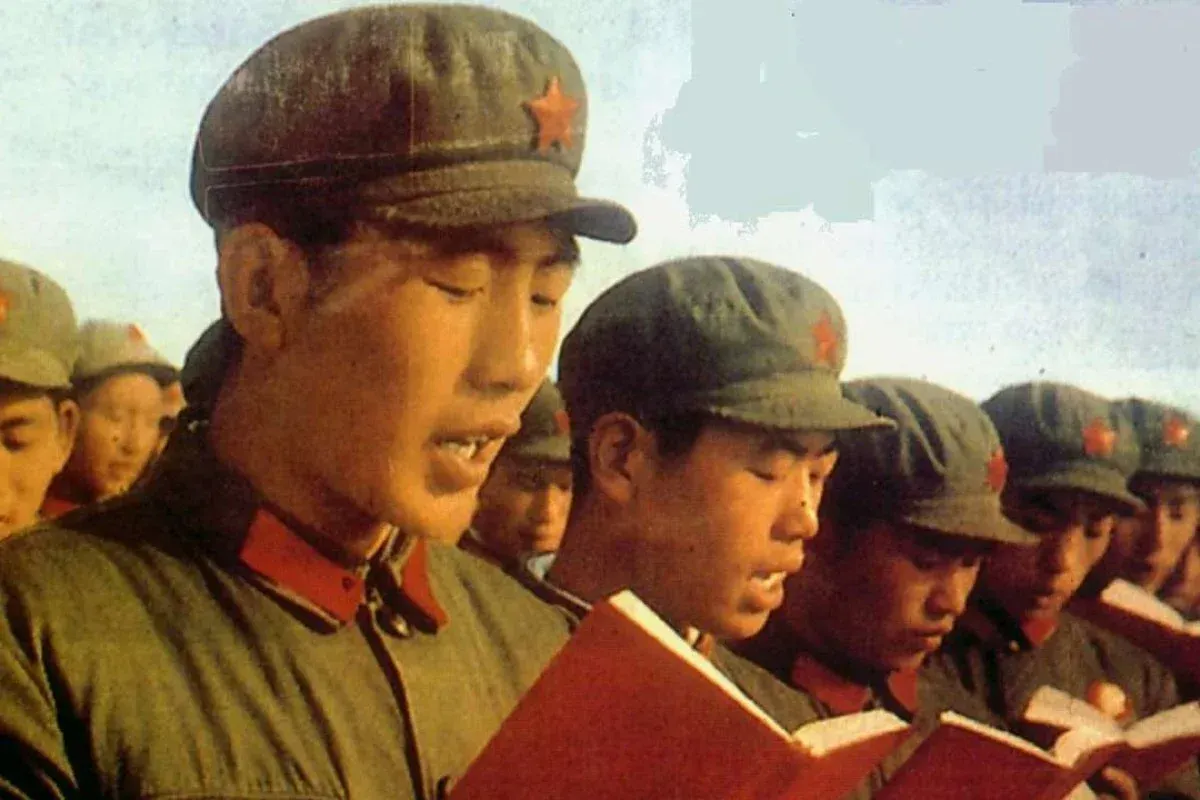
The Poverty of the Contemporary Left
The dominant culture of the American left is one of anti-intellectualism, dressed up as accessibility. Across the activist milieu, from NGOs to socialist electoral campaigns, to anarchist affinity groups, theory is treated as something between an obstacle and a luxury: an academic indulgence that distracts from the real work of organizing. This hostility to serious theoretical engagement is not innocent. It reproduces the ideological conditions that keep the working class and oppressed peoples disoriented, incapable of developing the strategic clarity that revolutionary transformation requires.
A movement without theory is a movement without a compass. It mistakes motion for direction, activity for politics, and moral outrage for analysis. The result is predictable: cycles of mobilization and demoralization, righteous energy dissipating because it cannot identify the actual levers of power, let alone develop a strategy to seize them.
Theory and Practice Are Not Opposites
The first thing a revolutionary must understand about political education is that the division between "theory" and "practice" is itself ideologically loaded. In the dominant culture, theory is what happens in classrooms and practice is what happens in the streets. This is a false dichotomy, and it has done enormous damage.
Marx established that ideas are not free-floating phenomena but arise from and reflect material conditions. But the relationship between consciousness and material reality is not one-directional.[1] Theory shapes practice; practice tests and develops theory. Lenin's conception of this (finding its clearest expression in the Bolshevik experience) is that a revolutionary party must be guided by theory precisely because spontaneous struggle, left to itself, tends toward trade-unionist consciousness rather than revolutionary consciousness.[2] The working class, embedded in the ideological apparatus of capitalist society, cannot simply think its way to communism by accumulating grievances. It requires the intervention of a revolutionary organization that has armed itself with a scientific understanding of society.
Mao's contribution on this question was to deepen and systematize the Marxist-Leninist position. His essay "On Practice" articulates the dialectical relationship between knowledge and action: we come to know the world through acting in it, and we correct our understanding through the feedback of practice.[3] Theory without practice is sterile; practice without theory is blind. Political education is the mechanism by which a communist organization ensures that its activity is guided by the accumulated lessons of centuries of working-class struggle.
The Foundations: Dialectical and Historical Materialism
The starting point for any serious political education program is the philosophical foundation of Marxism: dialectical and historical materialism. These are not abstract indulgences but practical tools for analyzing reality.
Dialectical materialism holds that all phenomena exist in a state of constant motion and contradiction, that change occurs through the development of internal contradictions, and that quantitative changes accumulate into qualitative leaps.[4] For the revolutionary, this means understanding that capitalism is not a stable system requiring disruption from outside, but a system perpetually riven by its own contradictions (between the forces and relations of production, between the bourgeoisie and the proletariat, between imperialism and the oppressed nations) that generate the conditions for its own transformation.
Historical materialism applies this dialectical method to human society, establishing that the material conditions of production (the economic base) condition the character of political, legal, and ideological superstructures.[5] Understanding this does not mean reducing everything to economics but grasping how class power is reproduced through the state, law, ideology, and culture, and recognizing that genuine revolutionary transformation must address all of these levels simultaneously.
The Political Economy of Capitalism
A revolutionary who does not understand how capitalism works cannot understand what is to be done about it. Marx's critique of political economy, above all Capital, remains the indispensable starting point. The revolutionary must grasp the core concepts: surplus value and the extraction of profit through the exploitation of labor power; the tendency of the rate of profit to fall and the crises this structural dynamic generates; the concentration and centralization of capital into fewer and fewer hands.[6][7]
Lenin's analysis of imperialism as the highest stage of capitalism extends this framework to the global level.[8] The world is divided not simply into bourgeoisie and proletariat but into imperialist nations and oppressed nations, and this division shapes everything, from the labor aristocracy within the imperialist core to the super-exploitation of workers and peasants in the global periphery. Any serious revolutionary movement in the United States must reckon with the fact that it operates inside the leading imperialist power on the planet, and that this shapes both the class structure it confronts and every strategic question it faces.
Lenin and the Questions of Party, State, and Revolution
If Marx gave us the tools to analyze capitalism, Lenin gave us the theory of how to overthrow it. Three contributions are essential.
First, the theory of the vanguard party as developed in What Is to Be Done? Against economism and spontaneism, Lenin argued that a revolutionary party must be organized on the basis of professional revolutionaries united by a clear political line and capable of injecting revolutionary consciousness into the class struggle.[2] This is not an elitist concept but a practical recognition that revolution requires organization, and organization requires both discipline and ideological clarity.
Second, the theory of the state as developed in State and Revolution.[9] The state is not a neutral arbiter between classes but an instrument of class rule. The bourgeois state (including its democratic forms) cannot be reformed or gradually occupied from within. It must be smashed and replaced with a dictatorship of the proletariat. This is one of the most consistently misunderstood and most politically consequential theoretical contributions of the Marxist tradition, and it is the point where every opportunist tendency reveals its opportunism.
Third, the analysis of the revolutionary conjuncture. Lenin's development of the theory of imperialism, combined with his analysis of the uneven development of capitalism, established that revolution would not occur first in the most advanced capitalist countries but at the weakest links in the imperialist chain.[10] This insight (validated by the Russian, Chinese, Vietnamese, and Cuban revolutions) fundamentally reoriented global communist strategy.
Mao and the Development of Marxism-Leninism
The Chinese Revolution represented not simply the application of Marxism-Leninism but its creative development under conditions that neither Marx nor Lenin had directly confronted: a semi-colonial, semi-feudal society with an enormous peasantry and a small but strategically significant proletariat. Mao's theoretical contributions emerge from this concrete practice and constitute a genuine rupture in the history of communist thought.
The mass line (from the masses, to the masses) is a theory of revolutionary leadership that insists on the inseparability of the party's guidance and the masses' initiative. [11] The revolutionary organization does not issue directives from above, nor does it passively trail the spontaneous movements of the masses. It gathers the scattered and unsystematic ideas of the masses, synthesizes them through the application of Marxist analysis, and returns them in concentrated form as correct political lines. It then repeats this process continuously, subjecting each line to the test of practice.
The theory of people's war generalizes from Chinese experience to establish that the fundamental question of revolution is the question of state power, and that the oppressed can overcome the military superiority of the ruling class through protracted struggle.[12] Whatever the specific applicability of the military strategy to different conditions, its core insight remains universally valid: that the seizure of power requires a military strategy, not merely a political program, and that underestimating this question is fatal.
Mao's theory of continuing the revolution under the dictatorship of the proletariat confronted a problem that neither Marx nor Lenin had adequately theorized: the restoration of capitalism from within the socialist state itself.[13] The bourgeoisie, Mao argued, is reproduced within the Communist Party in the form of capitalist roaders who use positions within the party and state apparatus to gradually restore capitalist relations. Revolution is not a single event but a continuous process, a struggle that must be waged even, and especially, after the seizure of power.
The Contemporary Tasks
Political education is not the memorization of texts. It is the active appropriation of accumulated revolutionary theory and its application to concrete conditions. This means engaging seriously with the classical texts of Marxism-Leninism-Maoism not as religious scripture to be cited but as living science to be applied; developing the capacity to analyze the specific features of the present political conjuncture, the class structure, the balance of forces, the contradictions within the ruling class and among the people; and grounding this theoretical work in practice so that practice can test and correct theory.
The revolutionary's relationship to theory must be characterized by what Mao called "seeking truth from facts."[14] Dogmatism (mechanically applying formulas without engaging with concrete conditions) is as dangerous as empiricism (drowning in particular facts without the analytical framework to make sense of them).[15] Both errors are abundant in the contemporary left, often occupying the same organization simultaneously. The task is to develop a genuine Marxist-Leninist-Maoist analysis of the concrete situation and to build organizations capable of acting on that analysis with discipline and tenacity.
The poverty of the contemporary left is not simply a poverty of resources or organizational capacity. It is, first and foremost, a poverty of theory. Until that is addressed with the seriousness it demands, the energy generated by social crisis will continue to be dissipated rather than directed toward the one task that matters: the seizure of state power by the proletariat and the oppressed, and the construction of a new world on the ruins of the old.
Comrade Tiva is a member of Atlanta DSA and the Central Committee of Liberation.
Citations & Further Reading
[1] Karl Marx and Friedrich Engels, The German Ideology (1846)
Karl Marx, Theses on Feuerbach (1845)
[2] V.I. Lenin, What Is to Be Done? Burning Questions of Our Movement (1902)
[4] Friedrich Engels, Anti-Dühring (1877) and Dialectics of Nature (1873–1883)
J.V. Stalin, "Dialectical and Historical Materialism" (1938)
V.I. Lenin, Materialism and Empirio-Criticism (1909)
[5] Karl Marx, Preface to A Contribution to the Critique of Political Economy (1859)
[6] Karl Marx, Capital: A Critique of Political Economy, Vol. I (1867)
Part I on the commodity form and the fetishism of commodities, Part III on the production of absolute and relative surplus value, and Part VII on the general law of capitalist accumulation.
[7] Karl Marx, Capital: A Critique of Political Economy, Vol. III (published posthumously by Engels, 1894)
[8] V.I. Lenin, Imperialism, the Highest Stage of Capitalism (1917)
[10] V.I. Lenin, "On the Slogan for a United States of Europe" (1915) elaborated throughout Imperialism, the Highest Stage of Capitalism (1917).
[11] Mao Zedong, "Some Questions Concerning Methods of Leadership" (1943)
[12] Mao Zedong, "Problems of Strategy in China's Revolutionary War" (1936)
"On Protracted War" (1938)
"Problems of War and Strategy" (1938)
[13] Mao Zedong, "On the Correct Handling of Contradictions Among the People" (1957)
[14] Mao Zedong, "Reform Our Study" (1941)
[15] Mao Zedong, "Oppose Book Worship” (1930)